
How to Remove Forever Chemicals From Tap Water Step by Step

Table of Contents
Step 2: Check Your Water Utility Report Against EPA PFAS Drinking Water Standards
Step 4: Decide Between Point-of-Use and Whole-House Filtration
Step 5: Compare Certified Systems and Confirm NSF/ANSI 53 or 58 Ratings
Step 6: Install Your System and Verify Performance With a Follow-Up Test
Step 8: Understand the Costs and Regional Water Quality Differences
Last Updated: October 2, 2026
Step 1: Find Out Which Forever Chemicals Are in Your Water
You cannot remove forever chemicals from tap water until you know which ones are there. PFAS are a group of thousands of synthetic chemicals used to make coatings that resist heat, oil, stains, and water. The two most studied are PFOA and PFOS, but newer versions like GenX show up in water systems too.
Your first move is a water test. You have two options:
Check your utility's report first. It is free and fast.
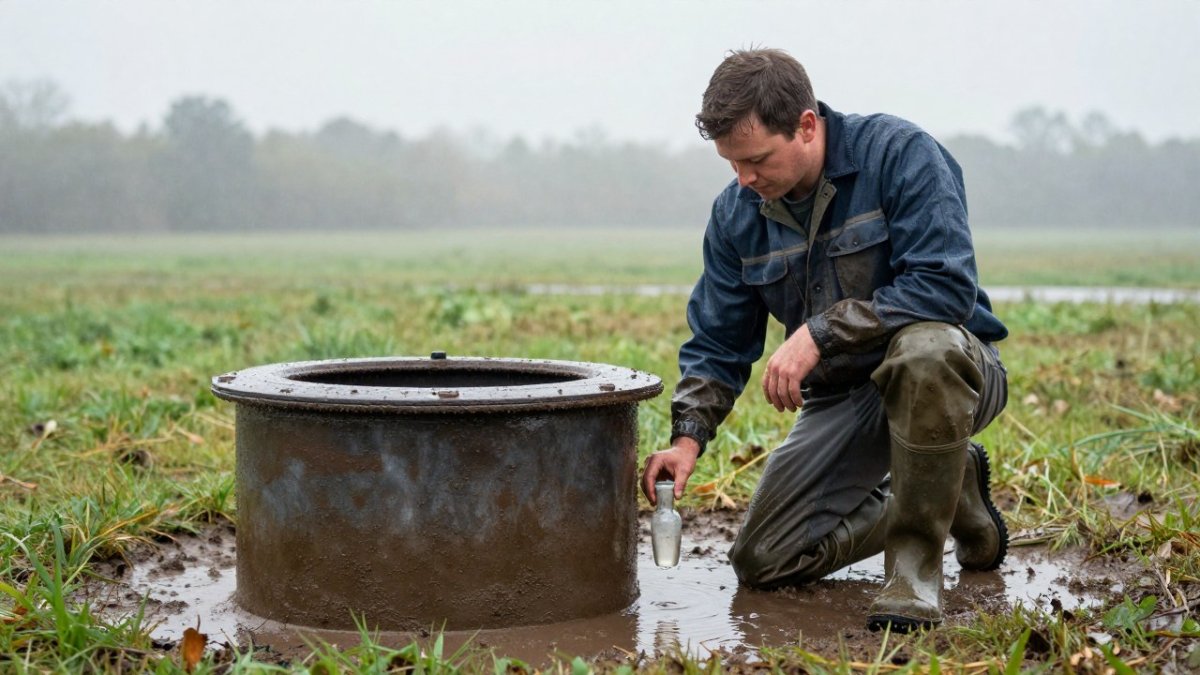
Order a certified lab test if you have a private well or want to confirm what is at your tap.
At Bevilacqua Pure, we start every consultation with the water itself, not a filter catalog. That order matters. A test tells you which compounds are present and at what levels, so you buy the right system instead of guessing.
Total Time: 1-2 weeks (lab results take time) Difficulty: Beginner
Step 2: Check Your Water Utility Report Against EPA PFAS Drinking Water Standards
Public water systems must publish an annual Consumer Confidence Report. That report lists detected contaminants, including PFAS where testing is required.
Compare what you find to the EPA PFAS drinking water standards. The EPA set enforceable limits for PFOA and PFOS in the parts per trillion (ppt) range. If your utility reports levels at or near those limits, a home filter is worth considering.
A few things to keep in mind:
Utility reports show system-wide averages, not your specific tap.
Private wells are not covered by any utility report.
Older reports may predate current testing requirements.
If your report shows nothing detected, that is good news, but it does not rule out PFAS below the reporting threshold. A follow-up test at your tap confirms what you are actually drinking.
Step 3: Choose the Best Home Water Filters for PFAS Removal
The best home water filters for PFAS removal use one of three technologies: activated carbon, reverse osmosis, or ion exchange. Each works differently, and each has limits.

Activated Carbon Filters: What They Capture and What They Miss
Activated carbon traps chemicals through adsorption, meaning contaminants stick to the carbon's surface as water passes through. Granular activated carbon (GAC) and carbon block filters both remove many PFAS compounds, plus chlorine and taste issues.
Here is the catch. Standard carbon filters vary widely in PFAS removal. Longer-chain compounds like PFOA and PFOS are captured well. Shorter-chain chemicals like GenX may slip through. Check the certification label before you buy.
Reverse Osmosis and Ion Exchange Systems
Reverse osmosis (RO) forces water through a membrane that blocks contaminants, including PFAS, heavy metals, and sediment. It is one of the most thorough home options. Ion exchange resins use charged beads to pull PFAS out of the water, often paired with carbon for broader coverage.
Technology | How It Works | Best For | Watch Out For |
Activated carbon | Adsorption | Taste, chlorine, longer-chain PFAS | Shorter-chain PFAS |
Reverse osmosis | Membrane filtration | Broad contaminant removal | Wastes some water |
Ion exchange | Charged resin beads | Targeted PFAS reduction | Needs carbon pairing |
Pro Tip A common mistake is buying a filter labeled "reduces PFAS" without checking which compounds and at what reduction level. The certification details tell the real story.
Step 4: Decide Between Point-of-Use and Whole-House Filtration
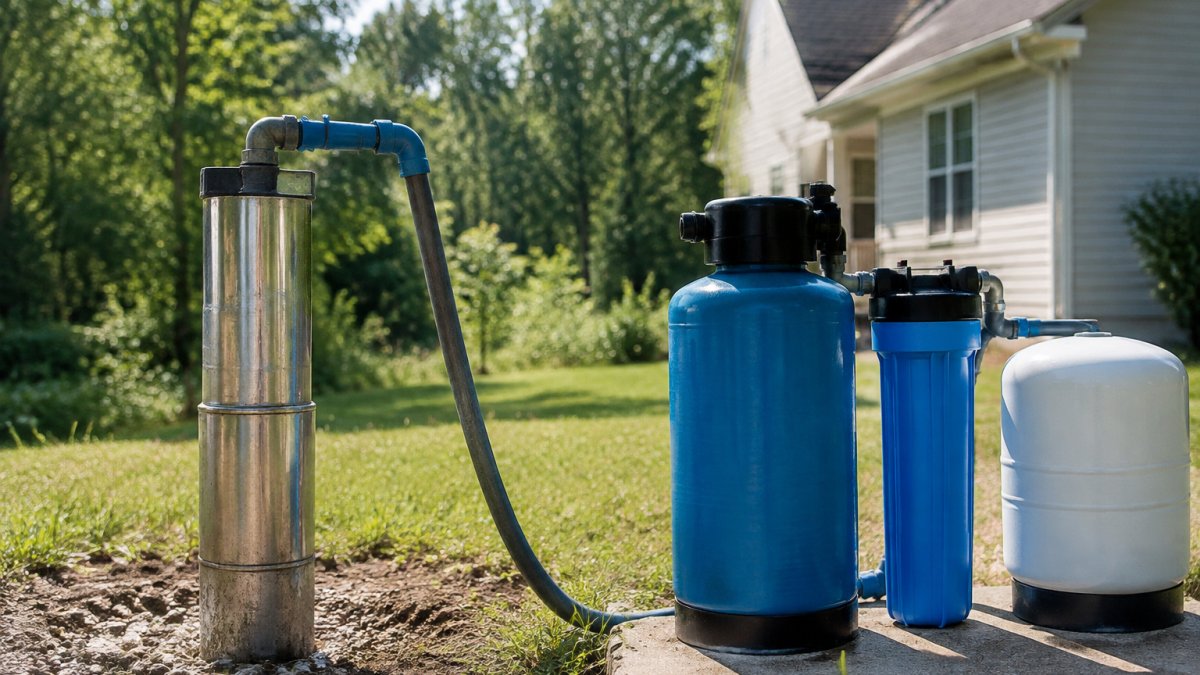
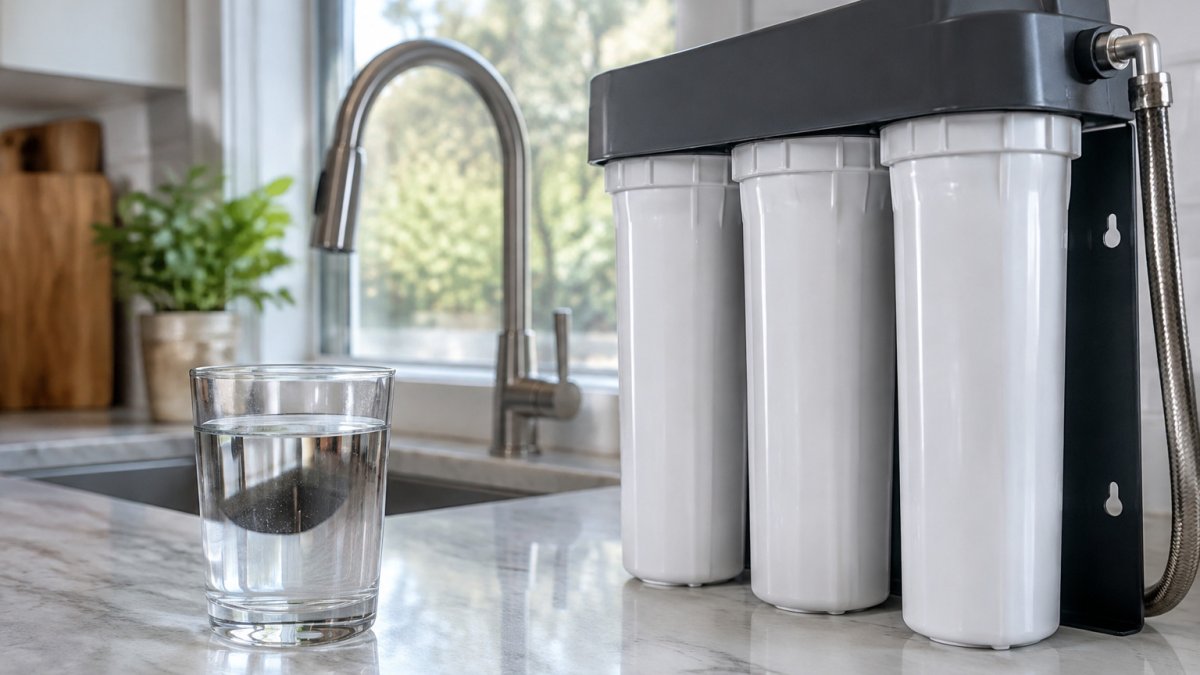
Point-of-use systems treat water at one tap, usually the kitchen sink. Whole-house filtration treats everything entering your home.
Which one fits you depends on your goal:
Drinking and cooking only? Point-of-use is simpler and costs less.
Concerned about showering and appliances too? Whole-house covers more.
Hard water plus PFAS? You may need two stages of treatment.
Most homeowners focused on drinking water start with point-of-use. If your test shows concerns beyond the kitchen, a whole-house design makes more sense. Bevilacqua Pure designs both, based on your water source and household needs.
Step 5: Compare Certified Systems and Confirm NSF/ANSI 53 or 58 Ratings
Certification is your proof that a filter does what the box claims. Without it, "reduces PFAS" is a marketing phrase, not a verified performance claim.
The two standards that matter most for PFAS removal are:
NSF/ANSI 53, covers health effects for point-of-use and point-of-entry carbon-based filters. This is the standard a carbon block or GAC system needs to carry a PFAS reduction claim.
NSF/ANSI 58, covers reverse osmosis systems, including the membrane and any post-filter carbon stage.
NSF/ANSI 401, a newer standard that covers emerging contaminants, including some PFAS compounds that 53 and 58 do not address. A filter can carry 401 without carrying 53, so check both.
Here is the part most buyers miss: a certification is issued for specific compounds at specific reduction levels, not for "PFAS" as a category. A listing might say the system reduces PFOA and PFOS by 95% or more, but say nothing about GenX, PFBS, or PFHxS. Those shorter-chain compounds behave differently in carbon media and often require a different treatment stage.
When you pull up a product's certification listing, look for four things:
The exact compound names, PFOA, PFOS, PFHxS, PFBS, GenX, and so on. Not just "PFAS."
The reduction percentage, the listing states the tested reduction, not a vague "removes."
The rated capacity, how many gallons the filter is certified to treat before performance drops below the claim.
The model number, certifications are issued per model, not per brand. A brand's flagship may be certified while a cheaper sibling is not.
A NSF guide to certified water filters lets you search by manufacturer, model, or contaminant. If a manufacturer cannot point you to a certification number, treat the claim as unverified.
One more comparison point: certified capacity matters as much as certified reduction. A filter rated for 200 gallons at 95% PFOA reduction is not the same product as one rated for 2,000 gallons at the same level. Divide the filter price by the certified gallon rating to get a true cost-per-gallon figure before you compare two systems side by side.
Step 6: Install Your System and Verify Performance With a Follow-Up Test
Installation depends on the system type. Under-sink RO units typically take a few hours. Whole-house systems are more involved and often need a professional.
Once installed, do not assume it works. Test your water again after a few weeks of use. This confirms the system is reducing the contaminants you targeted.
Follow these steps to verify:
Run the system for the recommended flush period.
Collect a water sample from the treated tap.
Send it to a certified lab.
Compare results to your first test.
If levels dropped, your system is doing its job. If not, something is wrong with the setup or the filter.
Step 7: Maintain Filters and Dispose of Them Safely
Filters do not last forever, and a saturated filter is worse than no filter at all. Once carbon media or an RO membrane reaches its rated capacity, it stops capturing PFAS and can release previously captured compounds back into the treated water. That is why the replacement schedule is not a suggestion, it is the point at which the system stops working.
Reading the Replacement Interval Correctly
Manufacturers publish replacement intervals in two ways: months or gallons. Gallons is the more honest number, because it does not assume how much water your household uses.
A filter rated for 6 months or 500 gallons will hit its limit sooner in a busy household. A family of four drinking and cooking with filtered water can pass 500 gallons in well under six months. Track your actual usage or replace on the gallon rating, whichever comes first.
Signs a filter is spent before the rated interval:
Flow rate drops noticeably at the tap.
Taste or odor returns.
The system has sat unused for weeks (media can grow biofilm).
What a Spent Filter Actually Contains
This is the part most guides skip. A carbon block or RO cartridge that has been removing PFAS is now holding concentrated PFAS, plus whatever else it captured, chlorine byproducts, heavy metals, sediment, and in some cases bacteria that colonized the wet media. The filter is not inert trash. It is a small, concentrated waste stream.
Disposal: What to Actually Do
There is no single federal rule that covers household spent filter media, so disposal depends on your state and municipal solid waste authority. A few practical steps:
Check your municipal hazardous waste guidelines first. Some jurisdictions classify PFAS-laden media as household hazardous waste; most do not, but the rules vary.
Look for manufacturer take-back programs. A growing number of filter brands offer mail-back recycling or disposal so the media is handled through a controlled channel rather than a landfill.
Bag it before it goes in the trash. If your local rules allow curbside disposal, seal the cartridge in a plastic bag to contain residual moisture and any loose media.
Never rinse and reuse a spent cartridge. Rinsing does not regenerate carbon, and it can flush captured contaminants down your drain.
Do not compost or burn filter media. Neither process destroys PFAS.
Watch Out Skipping filter changes is the most common reason a working system stops protecting you. A saturated filter can let contaminants pass straight through, and the water may still taste fine, so taste is not a reliable signal.
The Cost Side Nobody Quotes Up Front
Filter replacement is the real long-term cost of any PFAS system, and it is where cheap units get expensive. A low-priced carbon system with a short certified capacity can cost more per gallon over five years than a higher-priced system with a longer-rated cartridge. Before you buy, ask the seller for three numbers: the unit price, the replacement cartridge price, and the certified gallon rating per cartridge. Divide cartridge price by gallon rating to get cost per gallon, then multiply by your household's monthly filtered-water use. That figure, not the sticker price, is what you are actually committing to.
Key Takeaway Maintenance is not an afterthought to PFAS removal, it is the removal. A certified system with a tracked replacement schedule and a responsible disposal plan is the only version of this that works long term.
Step 8: Understand the Costs and Regional Water Quality Differences
Costs vary widely by system type, home size, and water conditions. A simple point-of-use carbon filter costs far less than a whole-house RO setup. Ongoing filter replacements add up over time too.
Rather than quote a number that may not fit your home, it is better to get a quote based on your actual water. Bevilacqua Pure offers a free in-home water test so the recommendation matches your water, not a generic package. Water quality also changes by region. Some areas draw from surface water, others from wells. Treatment needs differ. What works for a neighbor may not fit your source.
The right system is the one matched to your test results, your water source, and your household's actual use. Testing first saves money and avoids guesswork.
Common Mistakes to Avoid When Removing Forever Chemicals
The biggest mistake is buying a filter based on marketing instead of a water test. Here are others to watch for:
Assuming a pitcher filter removes all PFAS (many do not).
Skipping certification checks.
Forgetting to replace filters on schedule.
Treating only the kitchen when the whole home needs attention.
Ignoring disposal rules for spent filters.
A CDC overview of PFAS and health explains why bioaccumulation over time makes these chemicals worth addressing. Getting the details right matters more than acting fast.
Removing forever chemicals from tap water comes down to testing first, then matching the right certified system to your results. Bevilacqua Pure handles that whole process for you, from free in-home water testing to plain-language explanations of your results and a pressure-free consultation. We design solutions around your water, whether that means a targeted drinking-water system or whole-home filtration. Book your free water test with Bevilacqua Pure and get clear answers about what is really in your water.
Frequently Asked Questions
Can you remove PFAS from tap water at home?
Yes. Home filtration systems that use activated carbon, reverse osmosis, or ion exchange can reduce PFAS levels in tap water. For reliable results, look for systems certified to NSF/ANSI 53 or NSF/ANSI 58 for PFAS reduction. These certifications confirm the filter meets testing standards for contaminant removal. A follow-up water test after installation shows whether the system is working as expected for your specific water.
Do standard refrigerator or pitcher filters remove forever chemicals?
Most basic pitcher and refrigerator filters use carbon that is not certified for PFAS reduction, so their filtration efficiency for these chemicals varies. Some newer carbon block models carry NSF/ANSI 53 certification for specific PFAS compounds. Check the certification listing on the product label. If PFAS removal is your goal, a certified under-sink or whole-house system provides more consistent contaminant reduction than a standard pitcher filter.
How do I know if my water contains PFAS?
Start with your utility's annual water quality report, which lists detected contaminants and compares them to EPA PFAS drinking water standards. If your report does not include PFAS data, order a certified lab test that measures parts per trillion (ppt) for compounds like PFOA and PFOS. A professional water test can also check for other concerns such as chlorine, sediment, or heavy metals that affect taste and appliance buildup.
How often do I need to replace filters, and how should I dispose of them?
Replacement schedules depend on the system and your water quality. Carbon filters typically need changing every 6 to 12 months, while reverse osmosis membranes last 2 to 3 years. Used carbon filters can hold trapped contaminants, so bag them before placing them in the trash rather than rinsing them down a drain. Follow the manufacturer's disposal guidance, and check whether your local household hazardous waste program accepts spent filter media.
Comments